Mower
I never thought of myself as a lawn mower man. ‘Perfect’, manicured lawns devoid of life which exist solely for aesthetics aren’t my thing. I was always happy for the grass to grow and use the space. We sat upon it, had picnics, BBQs, pitched tents. I loved the life that would buzz around the long grass.
When I moved house, I went from a tiny 20m^2 lawn to over 500m^2. In the first year I carried on as usual. I cut occasionally and let the grass grow. That was a mistake. I soon realised that if I don’t stay on top of the cutting, I’ll be fighting it all season. I had to get serious. I had to become a lawn mower bore.
Last year I found myself with four lawn mowers. None allowed me to stay on top of the work. I needed a fifth.
The Old Mowers
Bosch CityMower 18V-32-300
I brought this with me from the old house where it performed well on a small lawn. The ’32’ in the name is the size of the deck in cm. This is tiny.
The 18v 4AH battery lasts about 30 minutes. I haven’t timed it. I have a few 2.5AH batteries and can easily do an hour’s work with this. The issue is that an hour's work with a 32cm deck is about 40 minutes work with a proper mower.
Flymo - 4 stroke, 0 wheels
This did not have any wheels. The deck was around 50cm, it performed well and was manoeuvrable when it was running. I don’t recall any other features. It cut or it didn’t. That’s your lot. No grass collector, no adjustable height, no wheels.
The problems came when it wasn’t running.
I couldn’t have it running when moving between lawns. There are obstacles and areas I don’t want to cut every time. Lugging this huge thing from one area to the next showed my age. Trying to start it showed its age. I had sympathy for the old thing but it was let down by bad design.
Who designs a 30KG mower without wheels?
Hayter ride on
This was left by the previous owners. To this day I have no idea how they made it work. I have steep lawns which don’t receive a lot of light at the bottom. It gets mossy and wet. The Hayter was far too heavy. It would regularly get bogged down and need to be pushed out. When it did work, the amount of trees and obstacles meant a not insignificant amount of the job had to be finished by a smaller mower or strimmer. Wrong tool for the job.
Mountfield SP42 (Stiga 4 stroke)
This was the first ‘expensive’ mower I bought. At the time, the £250 gave me pause. Is any push mower worth that? Yes, they are. This was not.
It was intended to replace the other three but I had nothing but problems.
The Stiga engine would cut out after a few minutes. I spent a lot of time servicing it. The carb, spark, and filters were all replaced despite being spotless. It had good, clean fuel. Each time it would work for a while but would inevitably go back to the shonky behaviour. (I later read reviews where others shared similar experience.)
Even without the engine issues, this thing was incapable of filling the bag beyond half way. The airflow indicator on the bag never worked so you’d only know it was half full when it started dropping grass. If you’re lucky. If the grass has any damp at all, it’d clog up and stall. I lost count of the times the self-drive belt fell off.
Better suited to small, dry lawns or the dump.
New Mower
I got rid of all but the Bosch. It barely takes any space and starts first time, every time. I used it while I spent a long time researching.
Here’s what I thought I needed:
- Something pro (Honda, Weibang?)
- Minimum 50cm deck
- Solid, reliable engine (Honda?)
- Aluminium deck
Here’s what I bought:
- Sort of pro
- 51cm deck
- Battery powered motor
- Plastic deck
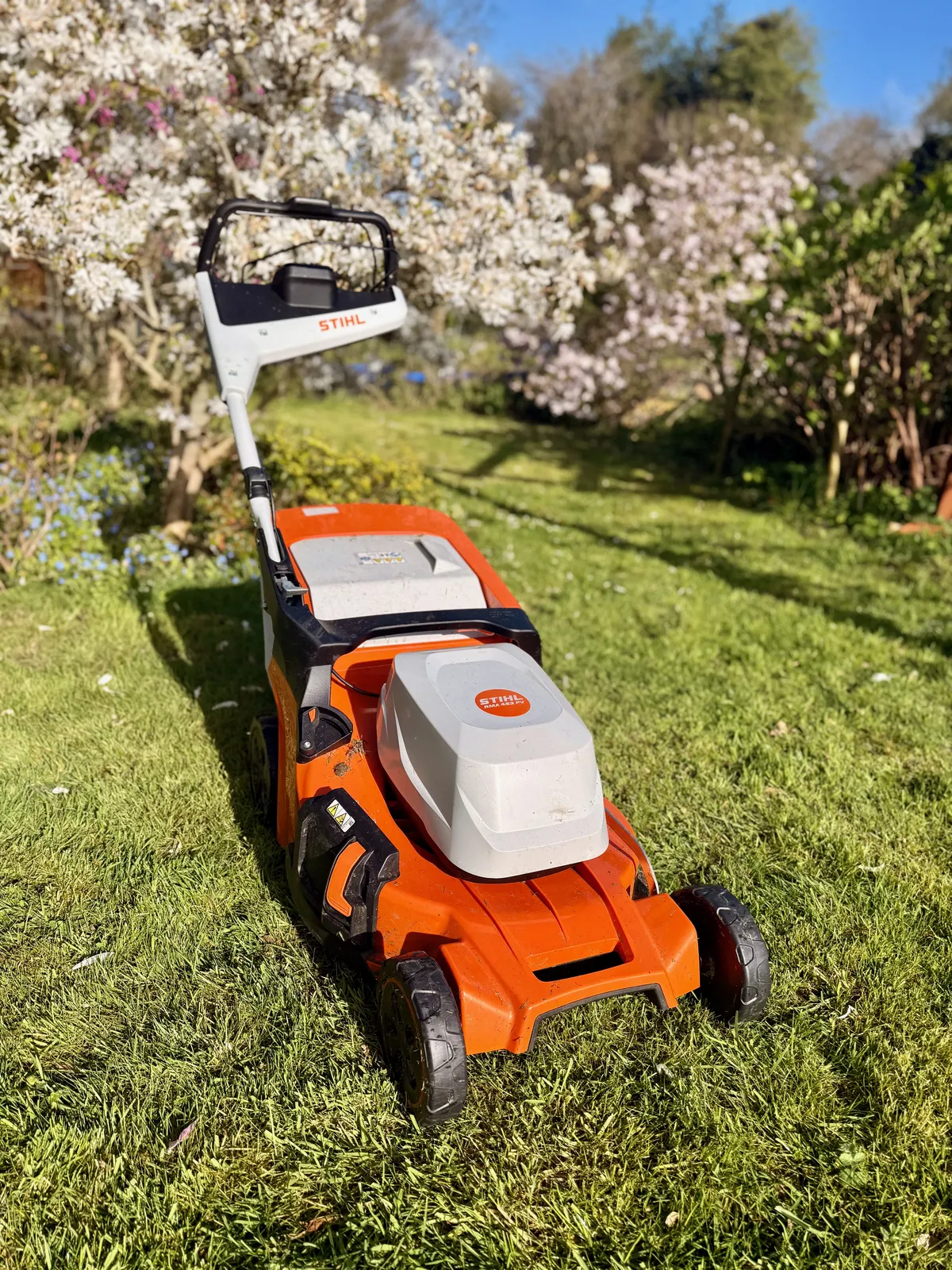
Stihl RMA 453
Oh, the joy of knowing that when you have a job to do, the tool you have will do it and do it well.
I love this thing.
Battery
I already have two AP 200 batteries for my chainsaw and multi-tool so I didn’t factor batteries and chargers into the budget. If I didn’t have these, I doubt I would have gone for it. The price would have almost doubled. The fact the Bosch worked every single time - no servicing, no shoulder pain - turned me off petrol engines.
There are two battery bays. The battery in Slot 1 will be used first and it will automatically switch over to Slot 2 without any interruption. The control panel on the handle bar shows the charge of both batteries.
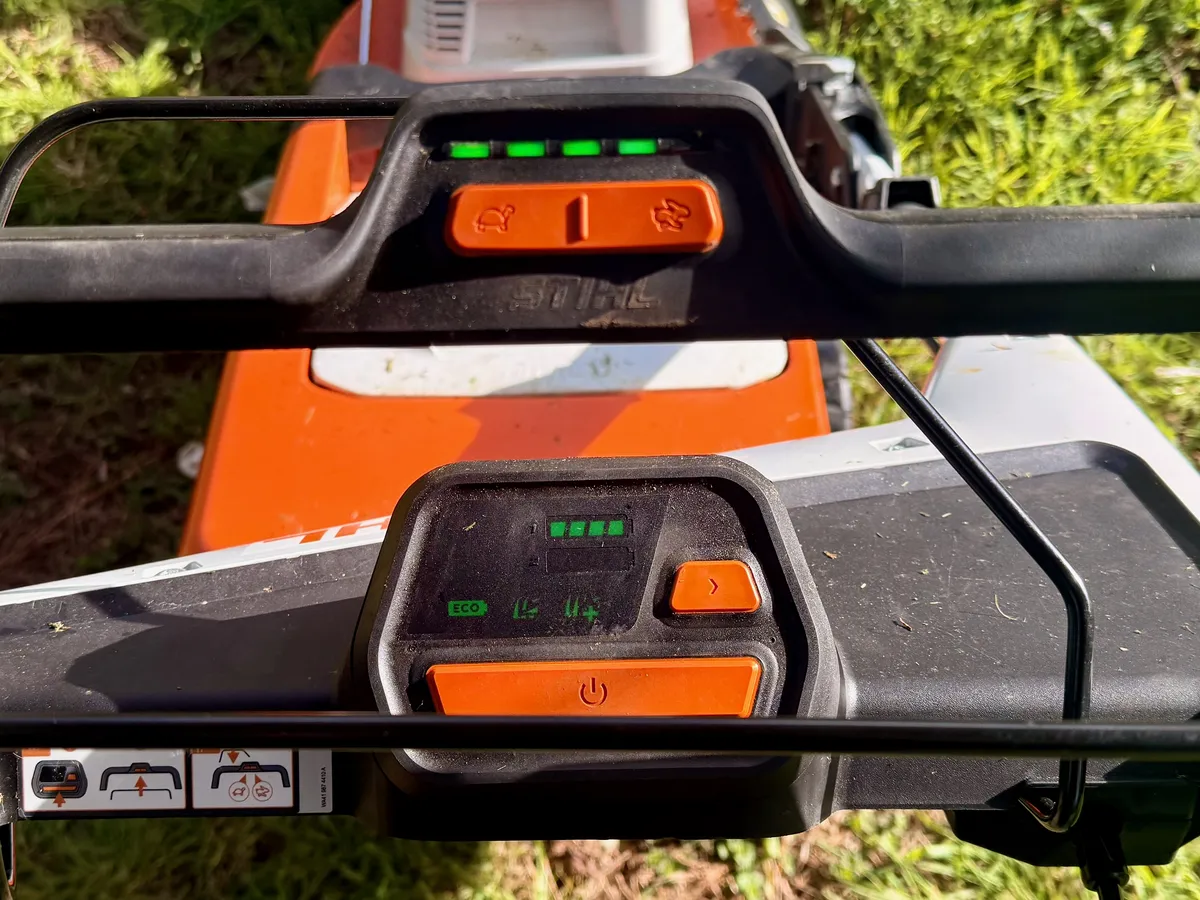
After the first few uses, I noticed the first battery would be ejected. I thought I had not pushed it in properly or the rough terrain had shaken it loose. No, Stihl’s clever automatic battery switching mechanism is to simply eject Slot 1. The battery stays within the housing, you don’t need to worry about losing the thing.
While I usually use ear defenders, it is not unpleasant to mow without them, unlike a 4 stroke.
One of my 200 batteries last for around 30 minutes. The whole job takes me around 90 minutes. I could charge one battery as soon as it is empty to do the whole job in one sitting but I’m not so organised.
The single arm
I remember with the traditional mowers, you take the bag off, push the mower forward, allowing you to lift the bag away. With the single arm you take the collector off and you can lift it away without faff. I appreciate the thought they put into it every time I take the collector off. There’s a lot of complexity here for a small quality of life improvement.
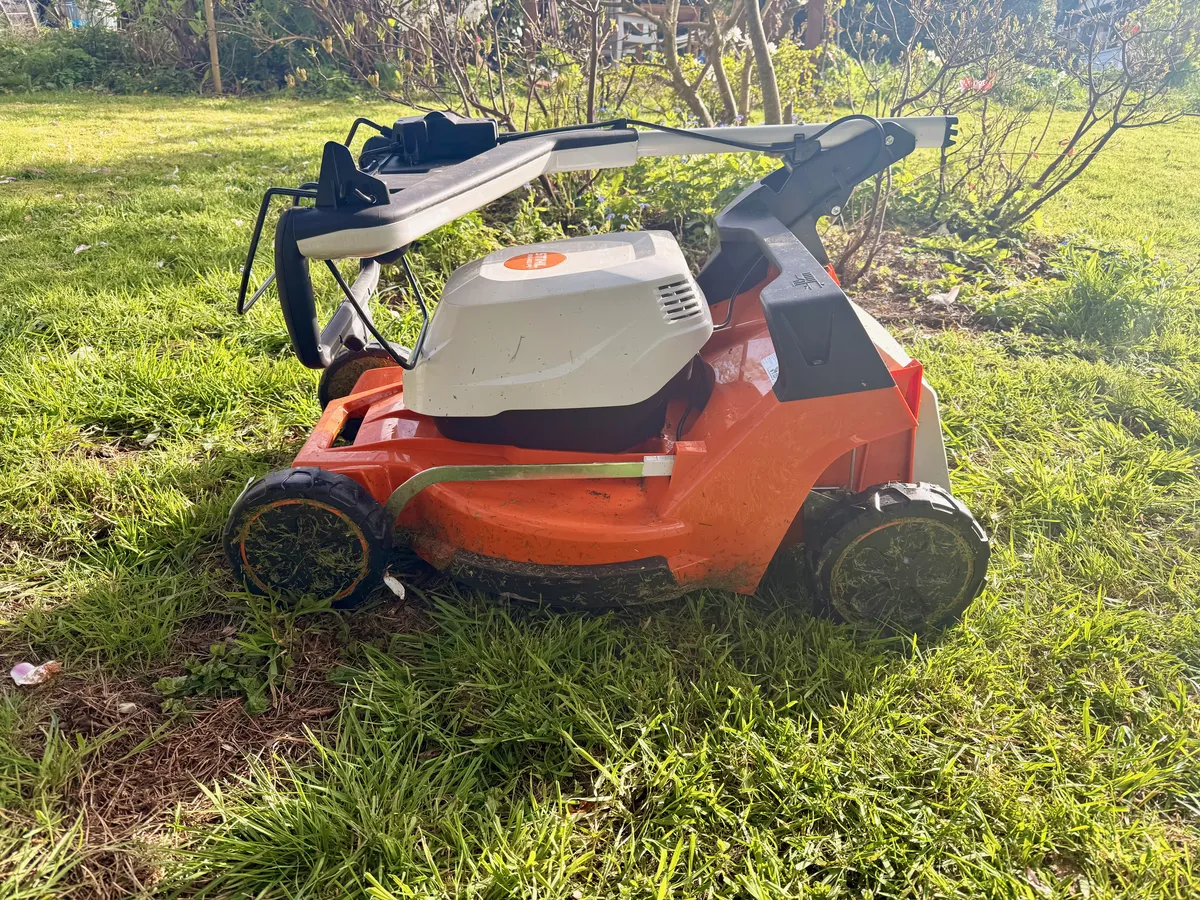
The arm has a latch which allows it to fold down in about 5 seconds. Even though the arm clears the battery compartment, the large control deck blocks the battery cover when folded. A minor annoyance but, really, I should remember to take the batteries out first.
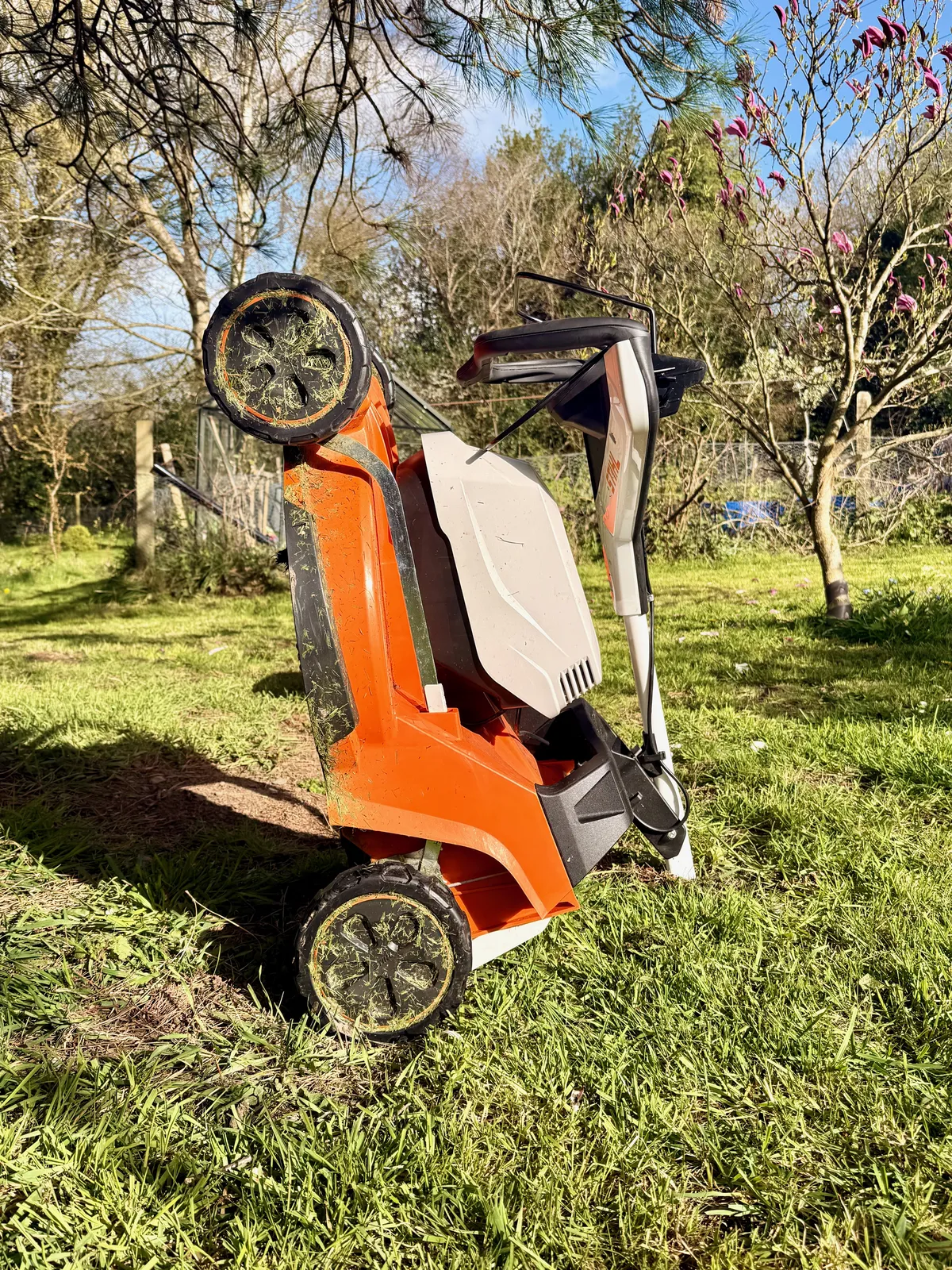
When folded the arm has a foot which allows the mower to stand up which allows for easy cleaning. 4 stroke engines will often have a warning about which way to tip the mower - or even not to tip at all. No such drama here.
Plastic deck
During research I spent a lot of time looking at aluminium decks because of probable damp/wet grass and the likely impact of sticks and stones hitting the underside. I do look after my machines but I was concerned about the longevity of a steel deck given the amount of money I was going to spend.
I don’t know what made me look again. Perhaps a combination of the Stihl 5 year warranty - details of which are incredibly hard to find - and the Bosch’s own plastic body performing well for a couple of months.
After a year of sticks and stones the dog has helpfully left around the place, bumps and scrapes the plastic deck is looking good.
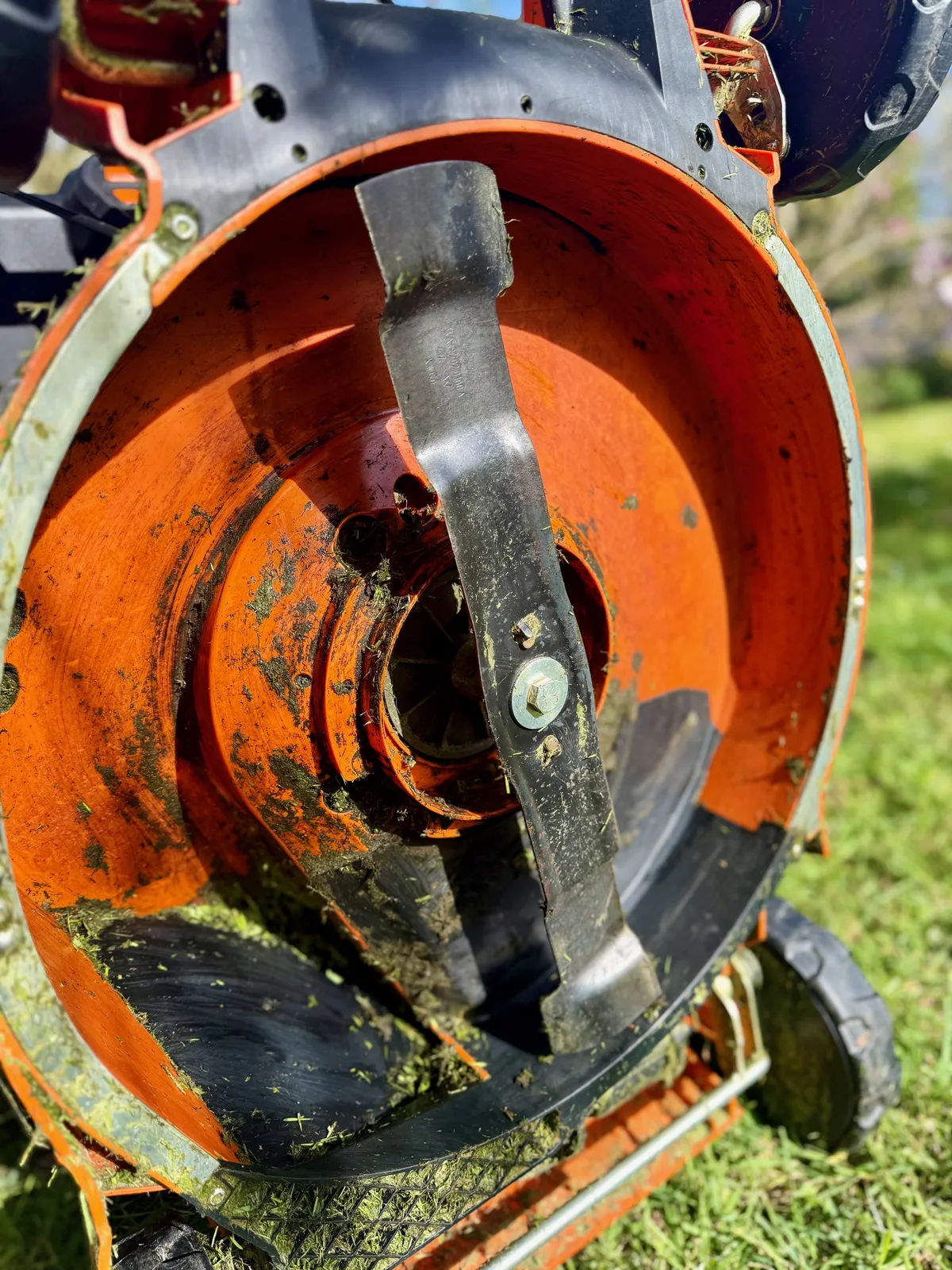
There are a couple of metal guards on each edge of the deck which appear to be designed for frequent side scrapes rather than intermittent impacts. Their presence doesn’t fill me with confidence. Is the plastic alone good enough or not?
It’s a nagging thought in the back of my mind. How long will it last? What happens if I get a crack? Stihl says it is UV protected but… is it? Is anything?
If I come back to this write up in the years to come, I’m sure it will be to update this section.
Self drive
Since I have the AP 200S batteries, I don’t get to enjoy the top speed of the self drive which is only available if used with the 300 or 500 batteries. The speed it gives is a little slower than my walking pace. I tend to only use the self drive when going up hill and haven’t ever been bothered by the speed. If I had the larger batteries I’d likely go for running time over increased speed.
I admit, I don’t know how it is powered. The Mountfield had a belt under the blade to the drive shaft on the rear wheels. It fell off all the time. The Stihl hasn’t failed once so I haven’t had to investigate.
Collector
I can’t call it a grass bag because it’ is a big plastic box.
This was attractive because all of the other plastic collectors I’ve had have worked great while all of the bags I’ve had have been next to useless. This one is great.
There are two handles, top and bottom. The side that hooks on to the machine is hinged. Emptying is a case of pushing the securing tab, grabbing both handles and opening it up.
No shaking, no stress on fabric due to weight, no rusty metal bars. It works.
The one advantage of a bag is the space they don’t take up in storage. My collector sits on top of the folded mower which, luckily, fits neatly under a work surface.